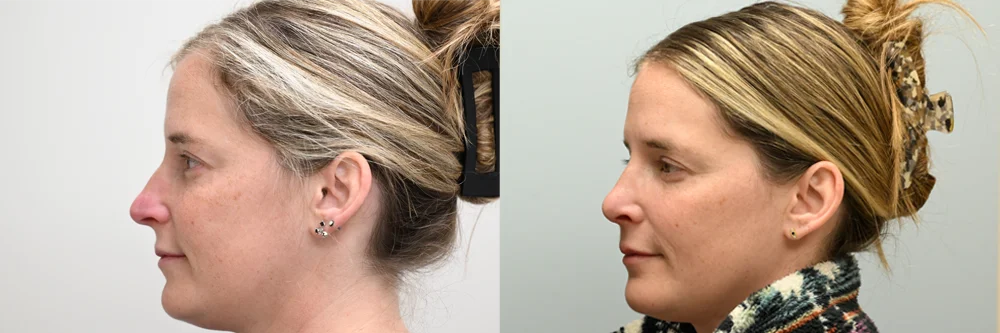
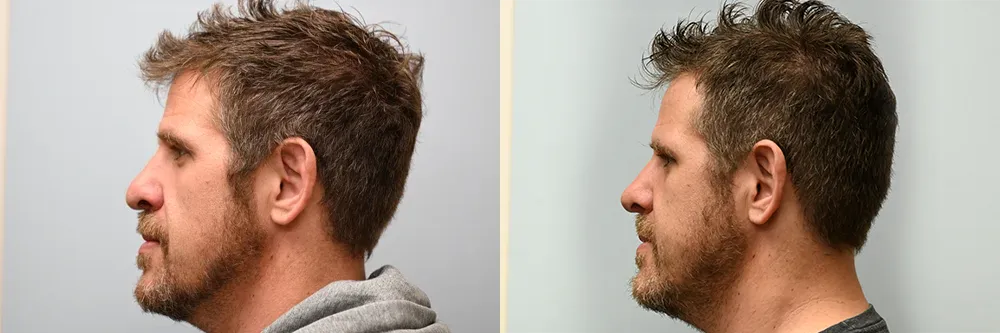
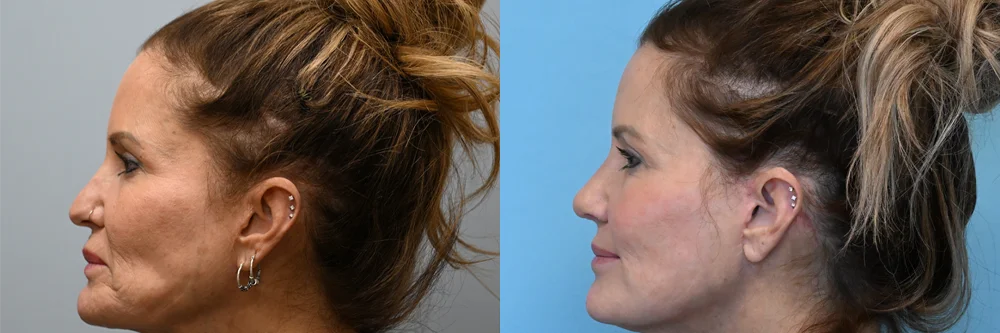
View Before & Afters
Swelling after rhinoplasty is normal and follows a predictable pattern. It peaks in the first few days, most visible swelling fades within the first few weeks, and the remaining subtle swelling, especially in the tip, continues to resolve for 6 to 12 months. Most patients look presentable within about 1 to 2 weeks, but the final shape of the nose can take up to a year to fully appear.
The first days after rhinoplasty often surprise patients. The nose looks fuller, the tip feels rounder, and the bridge may look wider than expected. Dr. Evan Jones guides patients in Bala Cynwyd, the Main Line, and Philadelphia through each stage with clear, realistic expectations. Below, we explain how swelling changes week by week, why the tip takes longest, and what you can do to help it settle.
Swelling is the body’s natural response to surgery. Fluid collects in the treated areas as part of healing, which creates temporary volume that gradually fades. Because the skin of the nose is attached closely to the cartilage and bone beneath it, even small amounts of fluid can make the nose look larger or less defined at first.
This early fullness isn’t a sign of your final shape. It’s simply how the tissues protect themselves while they heal. As the swelling resolves and the skin shrinks back onto the new framework, the refinements made during surgery become visible.
Every nose heals at its own pace, but most patients move through these general stages:
Each part of the nose settles at its own pace. The bridge usually refines first, followed by the middle third of the nose, while the tip takes the longest to reach its final contour. The skin over the tip is thicker and has more oil glands, and the tip is where drainage is slowest, so fluid lingers there longest.
Tip swelling can also make the tip look higher or rounder for a few months. This is normal and usually resolves on its own. Patients who had tip rhinoplasty often see less overall swelling because less of the nose was treated, but the tip itself still takes time to settle.
The timeline varies based on several factors:
Dr. Jones reviews these details during your consultation so you know how your own anatomy and surgical plan may shape your recovery.
You can’t skip the healing process, but these steps can help swelling settle as smoothly as possible:
Swelling that slowly improves is expected. Call our office if you notice swelling that suddenly gets worse, increasing pain, fever, redness or warmth spreading across the nose, heavy bleeding, or swelling that’s much greater on one side and getting worse. Dr. Jones will see you at regular follow-up visits, usually 4 to 6 over the course of your recovery, to check your progress.
Dr. Evan Jones is a fellowship-trained facial plastic and reconstructive surgeon. He earned his medical degree from the Lewis Katz School of Medicine at Temple University, completed his otolaryngology–head and neck surgery residency at Baylor College of Medicine, and completed a fellowship in facial plastic and reconstructive surgery at Houston Methodist Hospital. He’s a member of the American Academy of Facial Plastic and Reconstructive Surgery and the American Academy of Otolaryngology–Head and Neck Surgery.
Dr. Jones is known for clear communication and thoughtful guidance. He explains each stage of rhinoplasty recovery, including how swelling progresses and when results become visible, and he performs functional rhinoplasty for patients with breathing concerns. His focus is on results that complement your features without looking overdone.
A consultation with Dr. Jones is the best way to understand how your nose will heal and what your final result can look like. He’ll study your nasal structure, review your goals, and explain how swelling is likely to progress based on your skin and the technique he recommends. Visit us at 333 East City Avenue, Suite PL-15, in Bala Cynwyd, call (610) 664-8830, or contact us online. Financing is available.
Most visible swelling fades within the first few weeks, and about 70% to 80% is usually gone by 3 months. The remaining subtle swelling, mostly in the tip, can take 6 to 12 months to resolve, and sometimes longer with thick skin or revision surgery.
Your nose will look noticeably better within a few weeks, but final results typically appear up to one year after surgery. The bridge refines first, and the tip’s final definition is usually the last thing to appear as the remaining swelling resolves.
Yes. Early swelling often makes the nose look wider, rounder, or larger than before surgery. This is temporary. As fluid leaves the tissues and the skin settles onto the new framework, the refined shape becomes visible over the following weeks and months.
Fluid tends to collect in the face while you lie down, so many patients notice more swelling when they wake up. It usually improves as you move around during the day. Sleeping with your head elevated can help reduce morning swelling.
Yes, mild uneven swelling is common, especially in the first few months. One side may look fuller than the other because tissues heal at slightly different rates. This usually evens out with time. Contact Dr. Jones if one side is getting worse or is painful.
Bruising around the eyes and cheeks usually peaks in the first 2 to 3 days and fades within 1 to 2 weeks. Keeping your head elevated and using cold compresses on the cheeks early on can help it resolve faster.
In some cases, especially with thick skin, a surgeon may use a small steroid injection to help reduce stubborn swelling above the tip. It isn’t needed for most patients. Dr. Jones will let you know if it’s an option based on how you’re healing.
View Before & Afters
Evan Jones MD